
prasad1
Active member
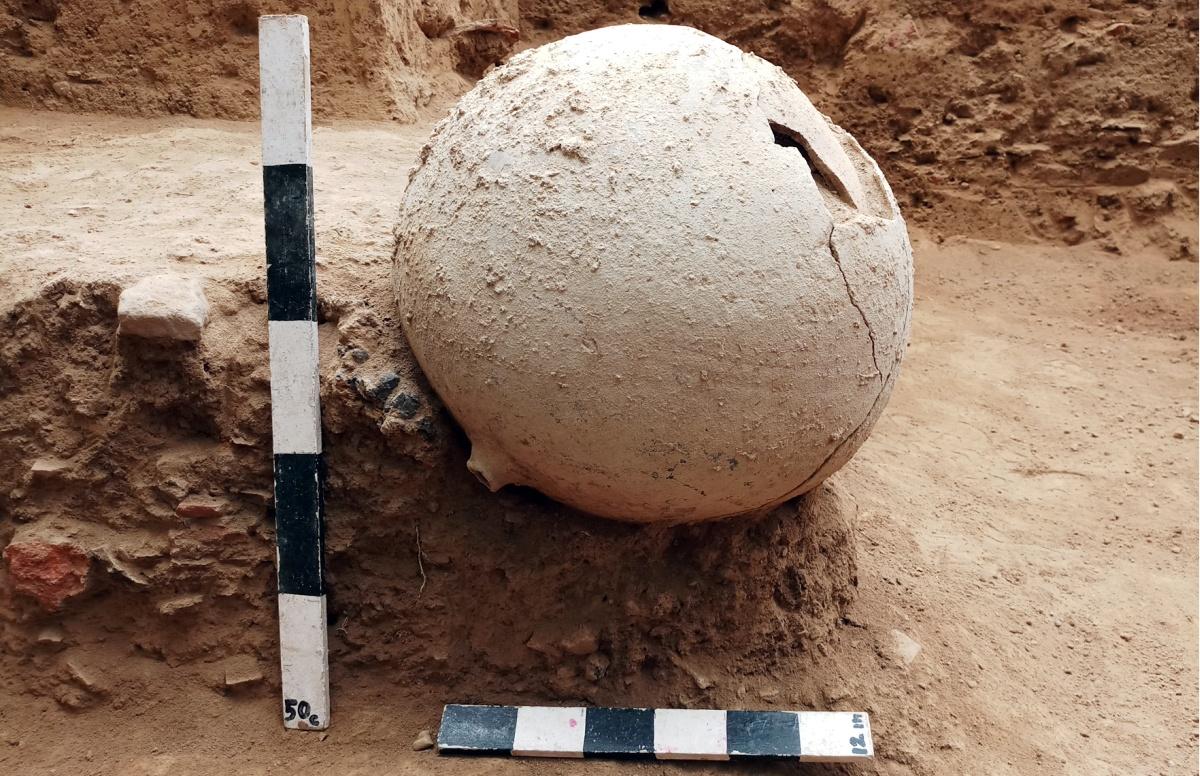
In southern Tamil Nadu, along the quiet curve of the Vaigai river, lies Keeladi, which until 2013, rarely featured in conversation beyond its proximity to the temple city of Madurai. But over the past decade, this unassuming patch of earth has become the unlikely site of one of India's most charged archaeological and political debates.
What began as a scientific excavation into ancient settlement patterns has turned into a flashpoint in a larger struggle over how Indian civilisation is remembered, narrated, and contested.
Today, Keeladi finds itself at the heart of a growing row between the Bharatiya Janata Party -led central government and the Dravida Munnetra Kazhagam-led state government, with competing claims over the antiquity and identity of Tamil civilisation.
The Union government has sought additional scientific validation for findings from the Sangam-era site, led by archaeologist Amarnath Ramakrishna of the Archaeological Survey of India (ASI).
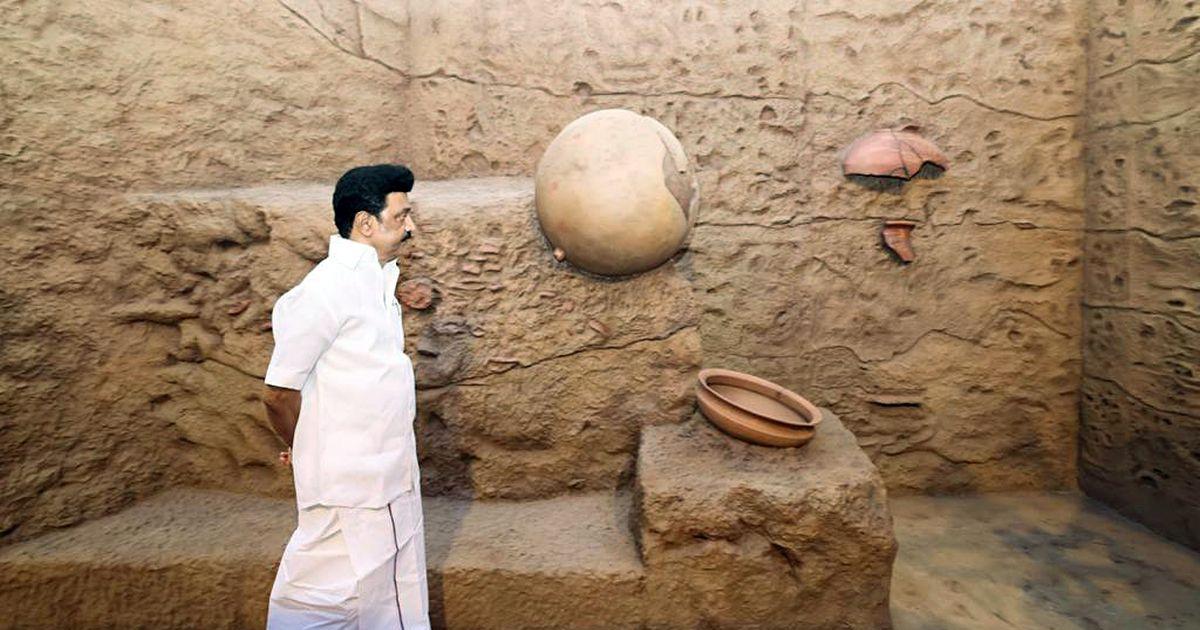
Tamil Nadu Chief Minister M K Stalin has denounced these demands as an 'onslaught on Tamil culture'.
With elections approaching, the issue has galvanised widespread protests across the state, with all major Dravidian parties -- including actor Vijay's Tamilaga Vettri Kazhagam -- lending support.
Ramakrishna had submitted a detailed 982-page report to the ASI in 2023. Based on carbon dating, the report pointed to the existence of a well-established urban civilisation at Keeladi dating back to 585 BCE, over 2,600 years ago. But in May, the ASI asked Ramakrishna to provide further evidence for Keeladi's continuity between the 5th century BCE and the 8th century CE. He refused.
On June 17, Ramakrishna was transferred from the ASI headquarters in New Delhi to the National Mission on Monuments and Antiquities in Greater Noida.
'The BJP-led Union government, keen on suppressing Tamil cultural pride, has demanded additional evidence more than two years after a detailed report was submitted,' Stalin said.
'This is a blatant attack on Tamil culture.' In response, Union Culture Minister Gajendra Singh Shekhawat said the report was 'not technically well supported' and called for more proof.
The DMK, reading the demand as a direct challenge to Tamil identity, hit back by demanding evidence for the 'imaginary' Saraswati civilisation.
Dravidian parties rallying around Ramakrishna argue that his report rests on extensive scientific testing conducted in laboratories across Pune, Bengaluru, Florida, and Italy.
Archaeologists working in Tamil Nadu say that nearly 60 per cent of the symbols and 90 per cent of the graffiti marks uncovered from local sites resemble those found at Indus Valley Civilisation settlements.
 www.rediff.com
What began as a scientific excavation into ancient settlement patterns has turned into a flashpoint in a larger struggle over how Indian civilisation is remembered, narrated, and contested.
Today, Keeladi finds itself at the heart of a growing row between the Bharatiya Janata Party -led central government and the Dravida Munnetra Kazhagam-led state government, with competing claims over the antiquity and identity of Tamil civilisation.
The Union government has sought additional scientific validation for findings from the Sangam-era site, led by archaeologist Amarnath Ramakrishna of the Archaeological Survey of India (ASI).
Tamil Nadu Chief Minister M K Stalin has denounced these demands as an 'onslaught on Tamil culture'.
With elections approaching, the issue has galvanised widespread protests across the state, with all major Dravidian parties -- including actor Vijay's Tamilaga Vettri Kazhagam -- lending support.
Ramakrishna had submitted a detailed 982-page report to the ASI in 2023. Based on carbon dating, the report pointed to the existence of a well-established urban civilisation at Keeladi dating back to 585 BCE, over 2,600 years ago. But in May, the ASI asked Ramakrishna to provide further evidence for Keeladi's continuity between the 5th century BCE and the 8th century CE. He refused.
On June 17, Ramakrishna was transferred from the ASI headquarters in New Delhi to the National Mission on Monuments and Antiquities in Greater Noida.
'The BJP-led Union government, keen on suppressing Tamil cultural pride, has demanded additional evidence more than two years after a detailed report was submitted,' Stalin said.
'This is a blatant attack on Tamil culture.' In response, Union Culture Minister Gajendra Singh Shekhawat said the report was 'not technically well supported' and called for more proof.
The DMK, reading the demand as a direct challenge to Tamil identity, hit back by demanding evidence for the 'imaginary' Saraswati civilisation.
Dravidian parties rallying around Ramakrishna argue that his report rests on extensive scientific testing conducted in laboratories across Pune, Bengaluru, Florida, and Italy.
Archaeologists working in Tamil Nadu say that nearly 60 per cent of the symbols and 90 per cent of the graffiti marks uncovered from local sites resemble those found at Indus Valley Civilisation settlements.
'Keeladi Could Be Older Than Indus Valley'
'There is no doubt about the antiquity of Tamil Nadu.'