

prasad1
Active member
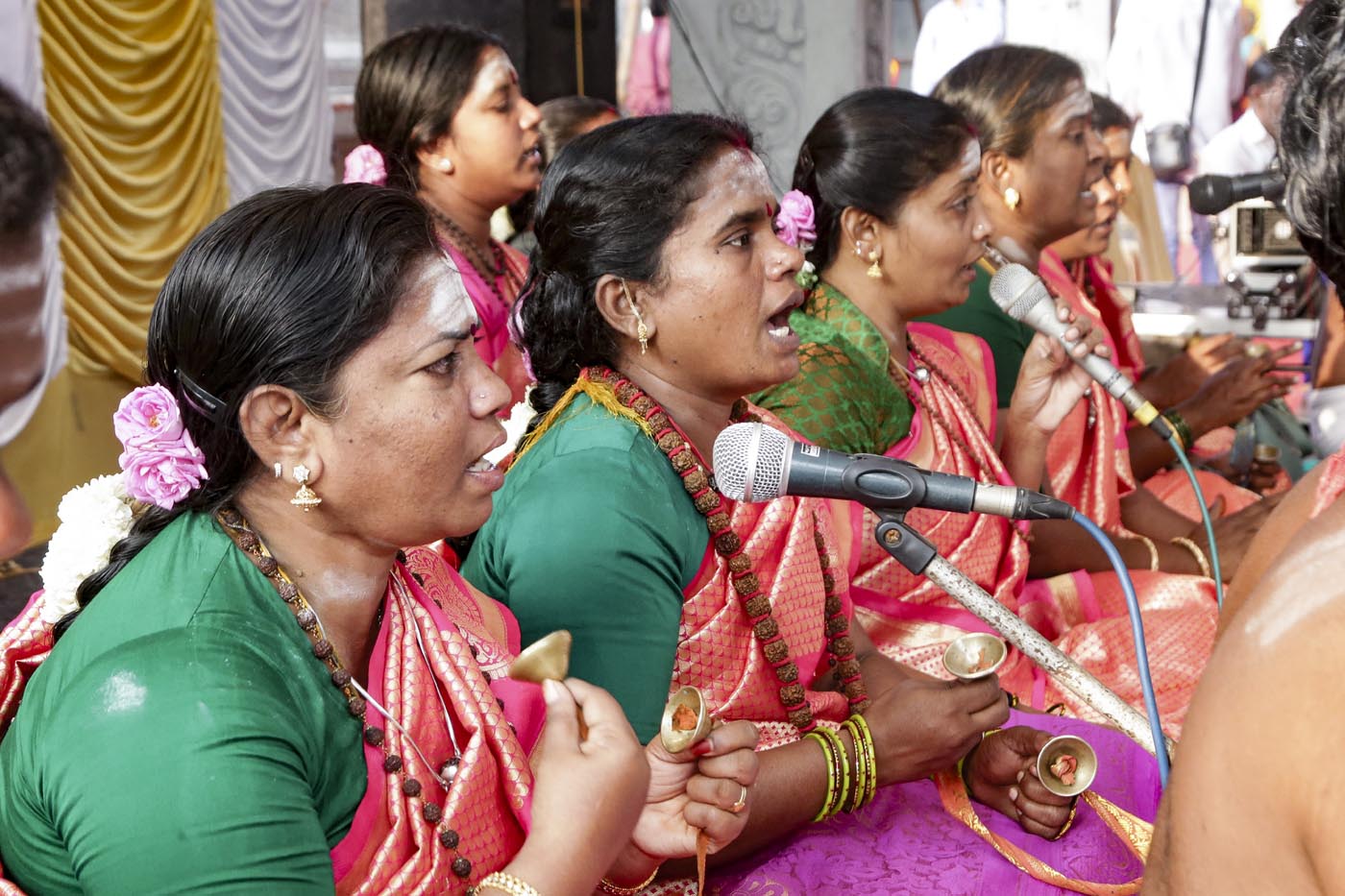
The odhuvars are more than musicians. In their collective memory, they safeguard a vast repository of sacred knowledge—wise words strung into thousands of poems composed by saints during the Chola period, from the ninth to the thirteenth century. Each poem tells the story of Tamil Nadu’s sacred landscape—its temples and the saints who once walked their grounds. The composers either performed or experienced miracles at these temples. The songs are often referred to as pann isai, a ten-stanza form common to their repertoire.
The odhuvars have long held an important place in the life of temples, where they sang in front of the sanctum as part of every puja. Rulers and devotees admired and respected them for their prowess in music, language and knowledge of the scriptures. Faith in the curative properties of the songs made them sought-after healers.
Tamil scholar Pavalar Velayudham explains, “The Thirumuraigal saved Saivism and Tamil. Both were endangered by invasion and alien rule. Odhuvars, as custodians of the songs, played a key role in preserving our culture and language. The songs are one of the oldest musical traditions—one which the odhuvars have kept alive. It is a precursor to Carnatic music, and its influence is evident even in contemporary movie compositions.”
While women odhuvars have been singing in temples for thousands of years, they gained official recognition only in 2006, when the government of Tamil Nadu appointed Smt. Angayarkanni as the first official female odhuvar of the Arulmigu Panchavarnaswamy Temple in Woraiyur. In recent years, increasing numbers of women have been appointed as odhuvars in state-run temples. Following this lead, charitable trusts and patrons have also begun appointing women odhuvars in other temples. For many women who have dedicated their lives to learning the holy texts and offering their voices in seva (volunteer service), this recognition brings greater satisfaction and credibility.
Odhuvari (temple singer) Angayarkanni’s groundbreaking appointment was part of the government’s social inclusion initiative, challenging long-standing gender, class and caste norms. Her entry into sacred singing was serendipitous; as a child, she had aspired to be a policewoman. While she was waiting for the police selection results, she enrolled in the Government Music College. After she completed her training in music and holy texts, she set aside her childhood dream, practiced for years and became an odhuvar.
Following her appointment, she rented a place near the temple to ease the commute from her remote village. The wages were very low. In the wake of her marriage and the birth of a daughter, maintaining a home on her own became financially unsustainable. After enduring hardship for seven years, she resigned and returned to her village, a decision she regrets deeply.
She reflects, “I did not give up easily. After so many years, I had to listen to my family. For my daughter’s sake, I had to go back to my village. I left with a lot of pain. I loved my job. Today, we have more women odhuvars and associations like our alumni groups to ask for help. In those days, we did not know how to navigate a career.”
Women odhuvars face hurdles at every step on their path to the hallowed halls of temples. In some cases, they are the first women in their families to enter the formal workforce. While most of the odhuvars had family support during their training, many faced initial discouragement, as recalled by Odhuvari Shanti Priya. “Many people laughed at me when I started learning music and Thevaram (holy hymns). They did not think I could sing at temples, or that devotional singing could become my vocation.” She feels vindicated now, as more women receive government recognition and support from other institutions.
Drawn from a cross-section of society, these women see a bright future for women odhuvars, as the Tamil Nadu government’s Hindu Religious and Charitable Endowments Department, which controls over 36,000 temples across the state, has been proactively appointing more women. The government music colleges in Tamil Nadu play a pivotal role in preserving traditional art forms. They offer comprehensive courses in Thevaram, Thirumuraigal and classical music. These institutions, established in every district, train and nurture talent from rural and underprivileged communities. Following this lead, more charitable trusts are also opening doors for women to serve in temples across the region.
This growing support marks a quiet but significant shift—transforming what was once unpaid seva, offered purely out of devotion, into a recognized and celebrated religious vocation. Their journey, marked by personal sacrifice and unwavering faith, stands as a collective triumph. Each new appointment lights the path for others to follow, encouraging more women to persist, to break barriers and to honor their inner calling.
The final frontier for many women odhuvars still lies within their own families. Becoming an odhuvar is not just a personal choice—it is a sacred commitment that extends to the entire household. Families who share in this commitment are the quiet pillars upholding the rise of female odhuvars.
With the support of nurturing homes and empowering institutions, the melodies of Thevaram will echo in women’s voices through the pillared halls of many more temples. In their songs live the ancestral wisdom, the enduring flame of devotion and the quiet courage to carry it forward into the future.
 www.hinduismtoday.com
The odhuvars have long held an important place in the life of temples, where they sang in front of the sanctum as part of every puja. Rulers and devotees admired and respected them for their prowess in music, language and knowledge of the scriptures. Faith in the curative properties of the songs made them sought-after healers.
Tamil scholar Pavalar Velayudham explains, “The Thirumuraigal saved Saivism and Tamil. Both were endangered by invasion and alien rule. Odhuvars, as custodians of the songs, played a key role in preserving our culture and language. The songs are one of the oldest musical traditions—one which the odhuvars have kept alive. It is a precursor to Carnatic music, and its influence is evident even in contemporary movie compositions.”
While women odhuvars have been singing in temples for thousands of years, they gained official recognition only in 2006, when the government of Tamil Nadu appointed Smt. Angayarkanni as the first official female odhuvar of the Arulmigu Panchavarnaswamy Temple in Woraiyur. In recent years, increasing numbers of women have been appointed as odhuvars in state-run temples. Following this lead, charitable trusts and patrons have also begun appointing women odhuvars in other temples. For many women who have dedicated their lives to learning the holy texts and offering their voices in seva (volunteer service), this recognition brings greater satisfaction and credibility.
Odhuvari (temple singer) Angayarkanni’s groundbreaking appointment was part of the government’s social inclusion initiative, challenging long-standing gender, class and caste norms. Her entry into sacred singing was serendipitous; as a child, she had aspired to be a policewoman. While she was waiting for the police selection results, she enrolled in the Government Music College. After she completed her training in music and holy texts, she set aside her childhood dream, practiced for years and became an odhuvar.
Following her appointment, she rented a place near the temple to ease the commute from her remote village. The wages were very low. In the wake of her marriage and the birth of a daughter, maintaining a home on her own became financially unsustainable. After enduring hardship for seven years, she resigned and returned to her village, a decision she regrets deeply.
She reflects, “I did not give up easily. After so many years, I had to listen to my family. For my daughter’s sake, I had to go back to my village. I left with a lot of pain. I loved my job. Today, we have more women odhuvars and associations like our alumni groups to ask for help. In those days, we did not know how to navigate a career.”
Women odhuvars face hurdles at every step on their path to the hallowed halls of temples. In some cases, they are the first women in their families to enter the formal workforce. While most of the odhuvars had family support during their training, many faced initial discouragement, as recalled by Odhuvari Shanti Priya. “Many people laughed at me when I started learning music and Thevaram (holy hymns). They did not think I could sing at temples, or that devotional singing could become my vocation.” She feels vindicated now, as more women receive government recognition and support from other institutions.
Drawn from a cross-section of society, these women see a bright future for women odhuvars, as the Tamil Nadu government’s Hindu Religious and Charitable Endowments Department, which controls over 36,000 temples across the state, has been proactively appointing more women. The government music colleges in Tamil Nadu play a pivotal role in preserving traditional art forms. They offer comprehensive courses in Thevaram, Thirumuraigal and classical music. These institutions, established in every district, train and nurture talent from rural and underprivileged communities. Following this lead, more charitable trusts are also opening doors for women to serve in temples across the region.
This growing support marks a quiet but significant shift—transforming what was once unpaid seva, offered purely out of devotion, into a recognized and celebrated religious vocation. Their journey, marked by personal sacrifice and unwavering faith, stands as a collective triumph. Each new appointment lights the path for others to follow, encouraging more women to persist, to break barriers and to honor their inner calling.
The final frontier for many women odhuvars still lies within their own families. Becoming an odhuvar is not just a personal choice—it is a sacred commitment that extends to the entire household. Families who share in this commitment are the quiet pillars upholding the rise of female odhuvars.
With the support of nurturing homes and empowering institutions, the melodies of Thevaram will echo in women’s voices through the pillared halls of many more temples. In their songs live the ancestral wisdom, the enduring flame of devotion and the quiet courage to carry it forward into the future.
Rise of Women Temple Singers
In recent times, women have come forward to fulfill the role of the odhuvar, singing the ancient Tamil sacred songs…
www.hinduismtoday.com


