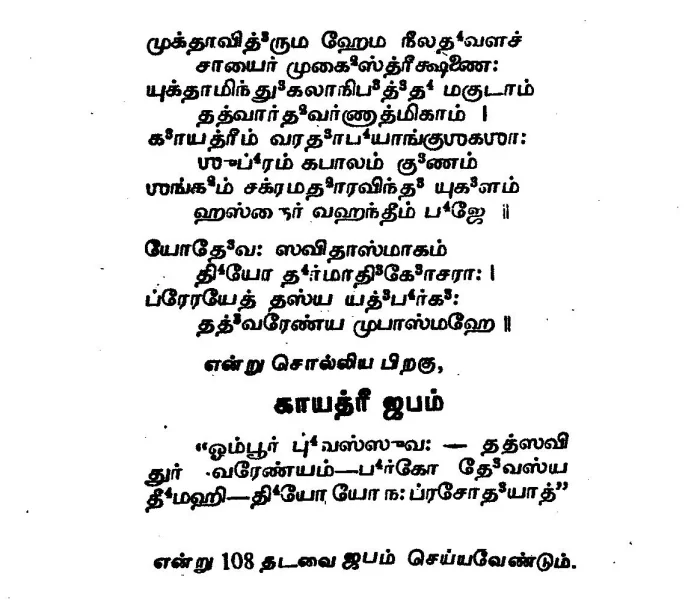
yaH (the full form of yo in the second line) = that which, jo in Hindi, and here it refers to the deva savitā.
naḥ = asmākaṃ, of ours
dhiyaḥ = karmāṇi dharmādiviṣayā vā buddhīḥ (the intellect in relation to work or dharma)
pracodayāt = prerayat (may that impel, push on, drive onwards)
tat = tasya (of that) devasya (of that deva)
savituḥ = sarvāṃtaryāmitayā prerakasya jagatsraṣṭuḥ parameśvarasya (of that Supreme God or parameśvara, who is present in each and everything (sarvāntaryāmi) and in such capacity, is the impeller
vareṇyaṃ = sarvairupāsyatayā jñeyatayā ca saṃbhajanīyaṃ (specially adorable (saṃbhajanīya), worshippable (upāsya), being known by all(jñeya) )
bhargaḥ = avidyā tatkāryayoḥ bharjanāt bhargaḥ, svayaṃ jyotiḥ, parabrahmātmakaṃ tejaḥ (that which destroys by roasting, parching, frying, baking, etc. avidyā or ignorance and actions caused by it ; self luminance ; the tejas caused by the parabrahma’s presence)
dhīmahi = vayaṃ dhyāyāmaḥ ( we meditate upon)
To summarise it for simpler understanding, this mantra means, "we meditate upon that radiant power of the deva savitṛ, who pervades the universe, is worthy of adoration, and impels us from inside our intellect to reach higher and higher.
The praṇava or OM and the additions bhūrbhuvassuvaḥ make the whole mantra deviate grossly away from the gāyatrī metre, and various interpretations are given to these additions also. But those things do not take away the core meaning given above.