

P.J.
0
10 Must Know Things About Your Eyes




Few people could argue that without our 5 senses, life would be pretty dull.
All our senses are extremely important but I think if you asked most people which sense would they least like to lose they would probably say their vision.
As with most of our abilities, our vision is something that many of us take for granted.
If you stop and think for a moment, you will realize that just about everything we do in our day to day life involves our vision. During this article I am going to try and see if I can get you to start thinking a little bit more about your eyes.
Listed below is my top 10 list of weird and wonderful things you didn't know about your eyes
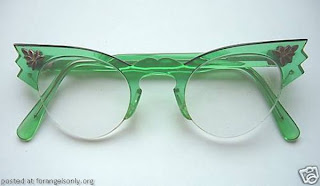
10. Everyone needs reading glasses as they get older ....
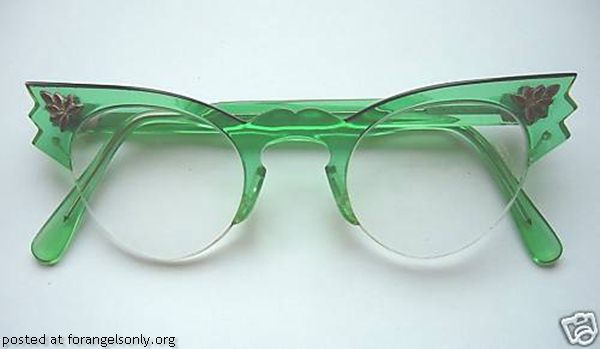
This is assuming that you already have perfect distance vision.
If you are currently reading this article and are under 40 years of age with perfect distance vision, I can say with absolute certainty that you will need reading glasses at some point in the future.
For about 99% of the population the age that you will first start needing reading glasses is between 43 and 50 years old.
This is because the lens in your eye slowly loses its focusing ability with age.
In order to focus things near to you, your lens has to change from a flat to a more spherical shape and it loses the ability to do this as you get older.
As you get to around 45 years old you will start to hold things further away from you to keep them focus.
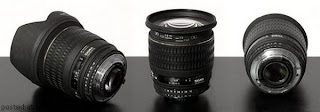
9. The lens in your eye is quicker than any camera lens...
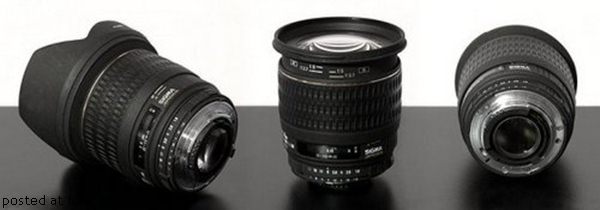
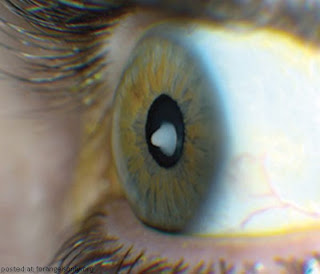
Just behind the pupil sits the eyes natural lens, whose function is to focus on the object you are looking at.
Just take a minute to glance around the room and think about how many different distances you are focusing at.
Every time you do this, the lens in your eye is instantly changing focus without you even being aware of it !!
Compare that with a camera lens which takes a few seconds to focus between one distance and another.
Just be thankful that the lens in your eye is as quick as it is, otherwise things would be continually going in and out of focus.
8. Your eyes are fully developed by the age of 7 years old ....

By the age of 7 years old our eyes are fully developed and are physiologically the same as adults eyes.
It is for this reason that it is vitally important to pick up a lazy eye before we reach this age.
The earlier a lazy eye is diagnosed, the greater the chance it will respond to treatment, as the eyes are still developing and capable of an improvement in vision.
Beyond 7 years old no amount of treatment will result in any improvement in vision.
7. You blink approximately 15,000 times each day ...

Blinking is a semi-involuntary function meaning we do it automatically, but can also choose to blink if we so require.
Blinking is an extremely important function of your eyes as it helps
remove any debris on the surface of your eye, by spreading fresh tears over them.
These tears help to nourish your eyes with oxygen and also have important bacterial properties.
You can think of the function of blinking as being similar to the action of the windscreen wipers on your car, cleaning and removing everything to keep you seeing clearly.
6. Everyone gets cataracts as they get older ...
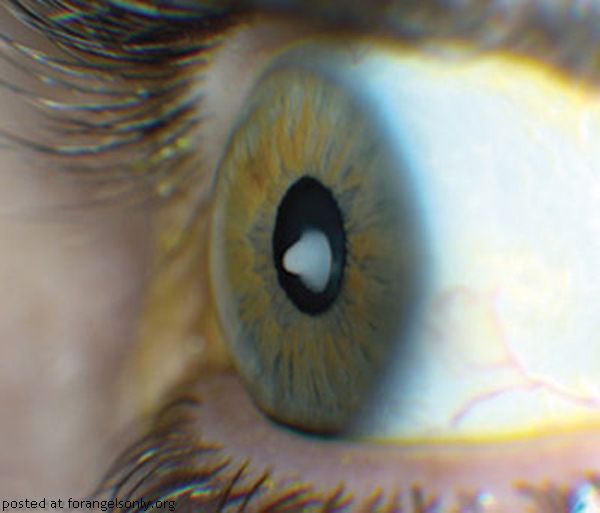
People don't realize that cataracts are just a normal consequence of getting older and everyone gets them at some point in their life.
You can think of cataracts as being similar to getting grey hair, in that it is just a normal natural age change.
The average age people first get cataracts is about aged 70 years old and by 80 years old you are guaranteed to have cataracts.
In the same way that you could not find any aged 80 years old without grey hair, it would be equally impossible to find anyone over 80 years old without cataracts.
Cataracts refer to a gradual clouding of the lens in your eye and typically take about ten years from onset to them needing treatment.
5. Diabetes is often first detected during an eye test ...

People who suffer from type 2 diabetes(the type you develop later in life) are often symptom free, meaning they often don't even know that they have it.
This type of diabetes is commonly picked up during an eye test as it can be seen as tiny hemorrhages from leaking blood vessels at the back of your eye.
This certainly is good reason to get your eyes tested regularly.
4. You see with your brain and not your eyes ...

The function of your eyes is to collect all the required information about the object you are looking at.
This information is then passed from your eye to the brain via the optic nerve.
It is the brain (visual cortex) where all this information is analyzed to enable you to seethe object in its finished form.
This is not to say that your eyes don't play an important role as they certainly do.
3. Your eyes can adapt to blind spots in your vision ...

Certain eye conditions such as Glaucoma and certain general health conditions such as having a stroke, can lead to you developing blind spots in your vision.
This would be extremely debilitating if it wasn't for your brain and your eyes ability to adapt to make these blind spots disappear.
It does this by suppressing the blind spot in your affected eye and letting your other good eye fill in the gaps.
It is adaptation like this that makes your eyes so resilient.
2. 20:20 vision is not the best vision you can have ...
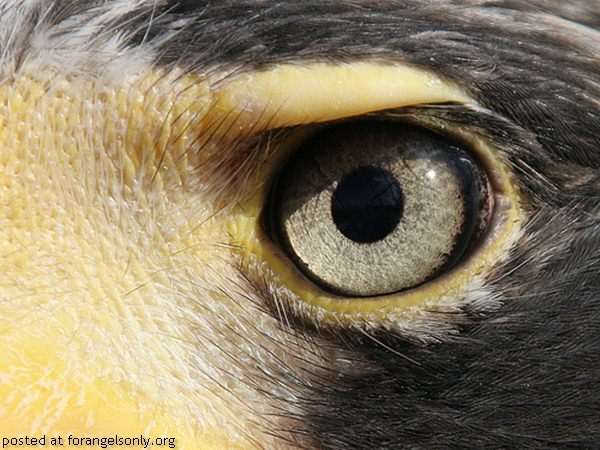
When people hear the phrase 20:20 vision they assume that this is the best vision possible.
However this is not true as 20:20 vision refers to what the average adult should be able to see.
If you imagine a typical eye test chart the 20:20 vision is probably only the line second from the bottom.
The line below it is even smaller than 20:20 vision and would mean you have 20:16 vision.
So don't be so impressed next time someone tells you they have 20:20 vision!
1. Your eyes water when they are dry ...
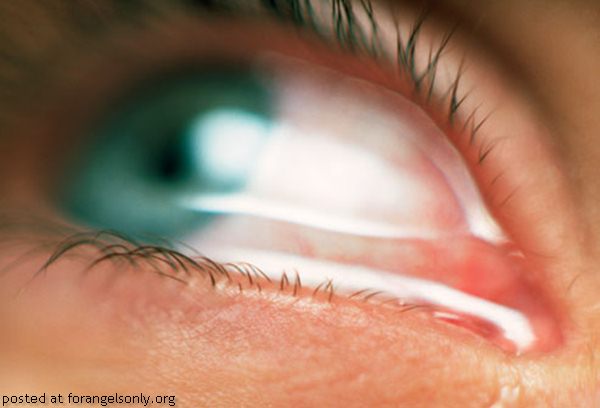
I know this might sound crazy but this is one of strange facts about your eyes.
Your tears are made up of 3 different components and they are water, mucus and fat.
If these 3 components are not in exactly the right quantities, your eye can become dry as a consequence.
Your brain responds to this dryness by producing extra water and hence your eyes water.
10 Must Know Things About Your Eyes ~ ForAngelsOnly
10 Must Know Things About Your Eyes ~ ForAngelsOnly


