
South Korea plans 1,000km/h, near-supersonic, ‘hyper-tube train’ that would leave maglev in the dust
PUBLISHED : Wednesday, 18 January, 2017, 1:58pm
South Korea is seeking to develop a train-like public transport concept that is almost as fast as the speed of sound reaching 1,000km/h, the Korea Railroad Research Institute (KRRI) said Tuesday.
The state-run institute will join forces with other research groups and Hanyang University to build the near-supersonic “train”, which would be able to travel from Seoul to Busan in half an hour.
“We hope to create an ultra-fast train, which will travel inside a state-of-the-art low-pressure tube at lightning speeds, in the not-too-distant future,” said a KRRI official.
“To that end, we will cooperate with associated institutes as well as Hanyang University to check the viability of various related technologies called the hyper-tube format over the next three years.”
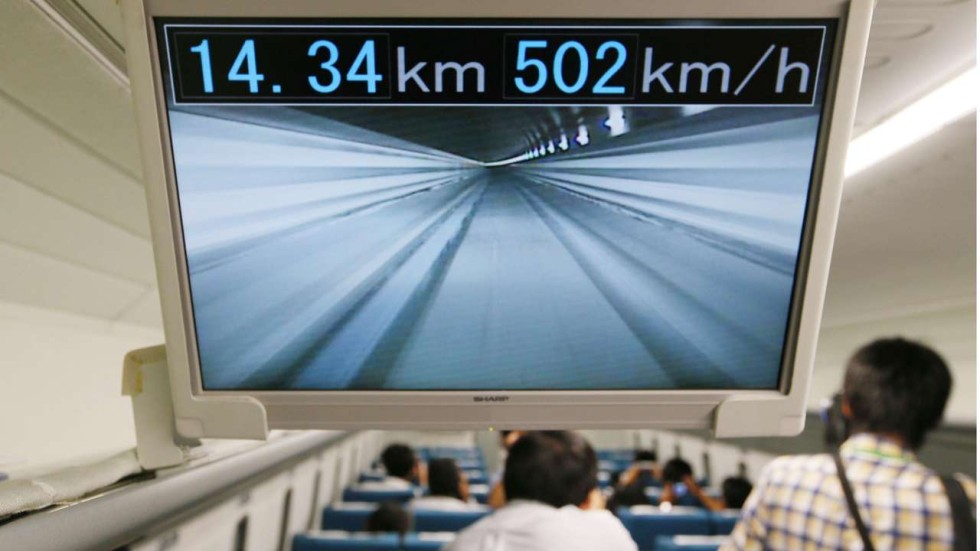
Currently, the fastest ground transport in the world is magnetic levitation (maglev) trains, which can travel at around 500km/h.
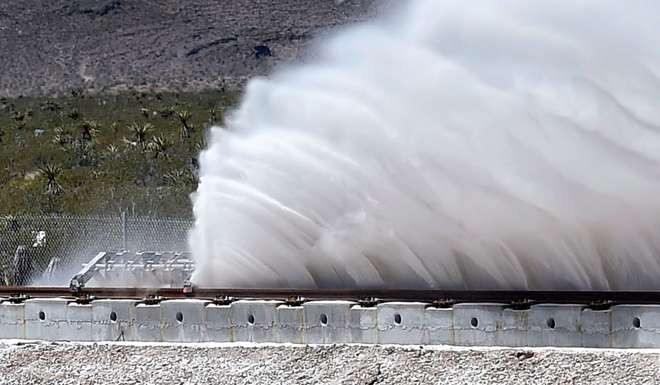
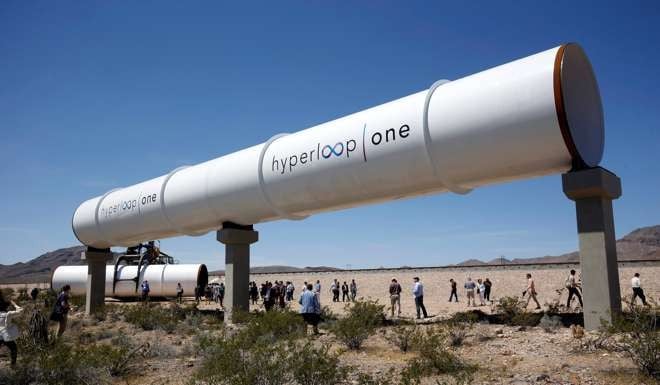
The innovative hyper-tube, or hyper-loop, technology, which transports people in floating pods inside tubes under a partial vacuum, was first proposed by Tesla Motors CEO Elon Musk.
Because there is neither friction from wheels and tracks, nor any air resistance, the hyper-tube pods can theoretically travel almost as fast as the speed of sound.
A maglev train is also free from friction but its speed is slowed by air resistance, particularly as the train speeds up.
“Many countries such as the United States, Canada, and China are competing to take the lead in this futuristic technology and we will also try to pre-empt our global rivals,” the KRRI official said.
“The government has focused on interdisciplinary research and this will be the biggest effort we are working on to develop a representative future technology.”
However, there are downsides to the seemingly potential-loaded hyper-tube technology, because it is vulnerable to engineering flaws.
For instance, if a terrorist makes a hole in the tube or a natural disaster damages it so that it loses its negative pressure, pods inside would crash catastrophically.
The KRRI said it would seek to overcome such challenges, in co-operation with its partners.
http://www.scmp.com/news/asia/east-...ans-1000km/h-near-supersonic-hyper-tube-train
PUBLISHED : Wednesday, 18 January, 2017, 1:58pm
South Korea is seeking to develop a train-like public transport concept that is almost as fast as the speed of sound reaching 1,000km/h, the Korea Railroad Research Institute (KRRI) said Tuesday.
The state-run institute will join forces with other research groups and Hanyang University to build the near-supersonic “train”, which would be able to travel from Seoul to Busan in half an hour.
“We hope to create an ultra-fast train, which will travel inside a state-of-the-art low-pressure tube at lightning speeds, in the not-too-distant future,” said a KRRI official.
“To that end, we will cooperate with associated institutes as well as Hanyang University to check the viability of various related technologies called the hyper-tube format over the next three years.”
Currently, the fastest ground transport in the world is magnetic levitation (maglev) trains, which can travel at around 500km/h.
The innovative hyper-tube, or hyper-loop, technology, which transports people in floating pods inside tubes under a partial vacuum, was first proposed by Tesla Motors CEO Elon Musk.
Because there is neither friction from wheels and tracks, nor any air resistance, the hyper-tube pods can theoretically travel almost as fast as the speed of sound.
A maglev train is also free from friction but its speed is slowed by air resistance, particularly as the train speeds up.
“Many countries such as the United States, Canada, and China are competing to take the lead in this futuristic technology and we will also try to pre-empt our global rivals,” the KRRI official said.
“The government has focused on interdisciplinary research and this will be the biggest effort we are working on to develop a representative future technology.”
However, there are downsides to the seemingly potential-loaded hyper-tube technology, because it is vulnerable to engineering flaws.
For instance, if a terrorist makes a hole in the tube or a natural disaster damages it so that it loses its negative pressure, pods inside would crash catastrophically.
The KRRI said it would seek to overcome such challenges, in co-operation with its partners.
http://www.scmp.com/news/asia/east-...ans-1000km/h-near-supersonic-hyper-tube-train
