
How old are our Puranas?

prasad1

Active member
I do not know as to the best fit for this topic. So it is GD section.
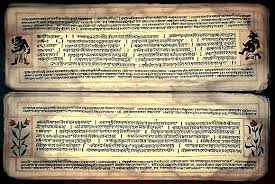
puranas.jpg

‘’ If our religion has survived many vicissitudes in the past, it is because of our temples and the festivals associated with them. The spiritual, moral, and ethical principles expounded by the Vedas have survived and spread through the Puranas. They teach the basic truths in a manner, which appeal to the heart. Let us not, therefore, be indifferent to these great works of religious literature, but treasure them, study them, conduct researches in them, and thereby benefit ourselves and the world’’—Kanchi Shankaracharya on February 4, 1958. From ‘Acharya’s Call’, Madras Discourses 1957-1960.

Puranas (Hindu mythological stories) are dated to Gupta period by the scholars on the basis of the genealogical tables in them. Ancient scholars who wanted to update the Puranas included the latest kings which misled the scholars. Actually Puranas are older than Gupta period i.e. 4th century AD. Vishnu Purana is the oldest of the eighteen Puranas.

Manikkavasagar, one of the four famous Saivite saints, praised Lord Shiva as a God ‘’older than the oldest and newer than the newest’’.

Puranas are copious. It contains 400,000 slokas/couplets. They contain lot of interesting stories. All the ancient seers of India are listed there. Names like Agastya, Vishwamitra and Vashista also misled many a scholar because several seers had the same name. Since they are Gotra (clan or group) names, all the Rishis or seers born in the family were called with the same name. Those who do research into Puranas must take all the above factors into account. Pargiter tried a make a historical list of kings out of the Puranas ( Pargiter’s ‘Dynasties of the Kali Age’, 1913). Though his attempt was appreciated by later day scholars, his list was not without errors. But one may take it as a starting point and improve upon it.

Oldest Purana: Vishnu Purana: (in the present form -300 AD)

 
They are late descriptions of ancient legends and consist of history of the universe from creation to destruction, genealogies of kings, heroes, sages, and demigods, and descriptions of Hindu cosmology, philosophy, and geography. They are colored with superstitions and also represent a corrupt form of Hindu Philosophy. 18 major Puranas.

 
There are traditionally 18 Puranas, but there are several different lists of the 18, as well as some lists of more or fewer than 18. The earliest Puranas, composed perhaps between 350 and 750 CE, are the Brahmanda, Devi, Kurma, Markandeya, Matsya, Vamana, Varaha, Vayu, and Vishnu. The next earliest, composed between 750 and 1000, are the Agni, Bhagavata, Bhavishya, Brahma, Brahmavaivarta, Devibhagavata, Garuda, Linga, Padma, Shiva, and Skanda. Finally, the most recent, composed between 1000 and 1500, are the Kalika, Kalki, Mahabhagavata, Naradiya, and Saura.

All the Puranas are strongly sectarian—some devoted to Shiva, some to Vishnu, and some to a goddess. But even those officially devoted to a particular god often pay considerable attention to other gods. By far the most popular Purana is the Bhagavata-purana, with its elegant treatment of the childhood and early life of Krishna. There are also 18 “lesser” Puranas, or upa-puranas, which treat similar material, and a large number of sthala-puranas (“local Puranas”) or mahatmyas (“magnifications”), which glorify temples or sacred places and are recited in the services at those temples.

 
Hinduism or Santana Dharma may be ancient, but what is practiced today as Hinduism is very much recently.
It only evolved during the Gupta period. That is about AD 300.
 
Agree, I would put our current civilisation around 5000 yrs old.

Of course, some practices and rituals could have come prior to it. But a large portion of it was developed and codified in the last 5000 yrs.
 
Hinduism or Santana Dharma may be ancient, but what is practiced today as Hinduism is very much recently.
It only evolved during the Gupta period. That is about AD 300.
I think today's Hinduism is far more recent. The evolution and solidification of the Smartha traditions (from the smrithis not referring to advaita) is what we practice at present at large.

This is true for the North and especially for Hindus who have recently converted or whose families have kind of drifted away and the temple-centric culture that has formed (primarily due to the popularity of the ISKON temples). By temple-centric, I am referring to the fact that going to temples is seen as the religious exercise undertaken as opposed to the typical yoga mudra yantra approach (yoga and mudra practiced by most today are mostly for momentary clarity of thought or for physical wellness and not from a spiritual or religious side and definitely not to the extent as they used to by large), a more Abrahamic approach if I may.

The denomination of Vedic Hindus are decreasing drastically, and new rules have been put in place. This may be a good thing or may not be, depending on the circumstance. (This is only a generalisation of Hindus by large, think 80-20 where 80% are as described as above)
 
This thread is snidely questioning our authenticity by quoting in the first post itself about vishnu purana being in 300 AD. 300 AD means 300 years After Death of Christ.

I consider this offensive to hindu sensibilities.

Often threads seem to be started innocuously but end up indirectly questioning our sensitivities. Unknowingly some way-farers jump into the thread and start giving the info in the thread some measure of authenticity. This is not appreciated.

We consider vedas to have emanated from Brahma's breath and later the itihasa puranas came into being. We should respectfully leave it at that.

Kindly close this thread admin with my post as the last post so people know why it was closed.

Dont simply delete my post alone
 
Last edited:
My opening post quoted text from Mr. Santanam to say that Oldest Purana: Vishnu Purana: (in the present form -300 AD). It is an opinion.
 
Date of the Puráńas

The Puráńas are also works of evidently different ages, and have been compiled under different circumstances, the precise nature of which we can but imperfectly conjecture from internal evidence, and from what we know of the history of religious opinion in India. It is highly probable,


that of the present popular forms of the Hindu religion, none assumed their actual state earlier than the time of Śankara Áchárya, the great Śaiva reformer, who flourished, in all likelihood, in the eighth or ninth century. Of the Vaishńava teachers, Rámánuja dates in the twelfth century, Madhwáchárya in the thirteenth, and Vallabha in the sixteenth 17; and the Puráńas seem to have accompanied or followed their innovations, being obviously intended to advocate the doctrines they taught. This is to assign to some of them a very modern date, it is true; but I cannot think that a higher can with justice be ascribed to them. This, however, applies to some only out of the number, as I shall presently proceed to specify.

Another evidence of a comparatively modern date must be admitted in those chapters of the Puráńas which, assuming a prophetic tone, foretell what dynasties of kings will reign in the Kálí age. These chapters, it is true, are found but in four of the Puráńas, but they are conclusive in bringing down the date of those four to a period considerably subsequent to Christianity. It is also to be remarked, that the Váyu, Vishńu, Bhágavata, and Matsya Puráńas, in which these particulars are foretold, have in all other respects the character of as great antiquity as any works of their class.
https://sacred-texts.com/hin/vp/vp002.htm
The Vishnu Purana, translated by Horace Hayman Wilson, [1840], at sacred-texts.com
 
23 Origin, Development and General Survey of Puranas
V. Venkata Ramana Reddy Ramana Reddy


Introduction


Purana, (Sanskrit: “Ancient”) in the sacred literature of Hinduism, any of a number of popular encyclopaedic collections of myth, legend, and genealogy, varying greatly as to date and origin. The holy Puranas are a vast treasure of literary and spiritual knowledge that throw light on past, present and future. It is said that the Puranas are the richest collection of mythological information in this world. In totality, the Eighteen Puranas contain information about ancient myths and folklores that pertain to some form of spiritual knowledge. Each of these Puranas is a book of hymns, stories, knowledge and instructions regarding sacred rituals and the way life should be led. It contains cosmic knowledge and how the universe affects our living. Traditionally, there are supposed to be 18 major Puranas.


Puranas were written almost entirely in narrative couplets, in much the same easy flowing style as the two great Sanskrit epic poems, the Mahabharata and the Ramayana. The early Puranas were probably compiled by upper-caste authors who appropriated popular beliefs and ideas from people of various castes. Later Puranas reveal evidence of vernacular influences and the infusion of local religious traditions.


These religious scriptures discuss varied topics like devotion to God in his various aspects, traditional sciences like Ayurveda, Jyotish, cosmology, and concepts like dharma, karma, reincarnation and many other Sages.


The Puranas are a genre of important Hindu, Jain and Buddhist religious texts, notably consisting of narratives of the history of the universe from creation to destruction, genealogies of kings, heroes, sages, and demigods, and descriptions of Hindu cosmology, philosophy, and geography.


Puranas usually give prominence to a particular deity, usually written in the form of stories related by one person to another. Brahmin scholars read from them and tell their stories, usually in Katha sessions (in which a traveling Brahmin settles for a few weeks in a temple and narrates parts of a Purana).


Time period of Puranas


Most of them attained their final form around 500 A.D. but they were passed on as an oral tradition since the time of Krishna (c. 1500 B.C.). In reference to the Origin of Indian Puranas, an early reference is found in the Chandogya Upanishad 500 BCE.


Author of Puranas Sage Vedavyasa


The Puranas are part of Hindu Smriti. Sage Vyasa is credited with compilation of Puranas from age Yuga to age, and for the current age, he has been identified and named Krishna Dvaipayana, the son of sage Parashara. According to tradition they were written by Vyasa at the end of Dvapara Yuga, while modern scholarship dates them to the latter half of the first millennium AD.


Vyasa is credited with compilation of Puranas from age Yuga to age, and for the current age, he has been identified and named Krishna Dvaipayana, the son of sage Parashara. According to tradition they were written by Vyasa at the end of Dvapara Yuga, while modern scholarship dates them to the latter half of the first millennium AD.


One of the main objectives of the Puranas was to make available the essence of the Vedas to the common man, and the Vedas were basically meant not for the scholars but for the ordinary man. They bring forth the Vedic knowledge and teachings by way of myths; parables, allegories and stories; legends; life stories of kings and other prominent persons; and chronologies of historical events. The Puranas unfolds the principles of Hinduism in a very simple way.


In all these Puranas the goddess Lakshmi is given a laudable place without any sectarian dispute. In the Vaishnavite Puranas, Shiva starts telling the efficacy of Vishnu to the Goddess Parvati. While Shaiva mythology places goddess Parvati, the consort of Shiva, as one half of His body (ardha naareeshvara tattva), Vaishnavites place the Goddess Lakshmi in the heart of Vishnu itself, as if it were a lotus (hridaya kamala). This is to depict the inseparable union of Universal purusha and prakriti, seed and field, or male and female.


Puranas (aka Puranams) usually refer to the Mahapuranas. There are also smaller Puranas known as Upapurananas.

 
1745957448485.webp


“If our religion has survived many vicissitudes in the past, it is because of our temples and the festivals associated with them. The spiritual, moral, and ethical principles expounded by the Vedas have survived and spread through the Puranas. They teach the basic truths in appeals to the heart. Let us not, therefore, be indifferent to these great works of religious literature, but treasure them, study them, conduct research in them, and thereby benefit ourselves and the world’—Kanchi Shankaracharya on February 4, 1958. From ‘Acharya’s Call’, Madras Discourses 1957-1960.
Puranas are dated to Gupta period by the scholars on the basis of the genealogical tables in them. Ancient scholars who wanted to update the Puranas included the latest kings which misled the scholars. Actually, Puranas are older than Gupta period i.e. 4th century AD. Vishnu Purana is the oldest of the eighteen Puranas.


Manikkavasagar, one of the four famous Saivite saints, praised Lord Shiva as a God ‘’older than the oldest and newer than the newest’’. This epithet is applicable to Puranas as well. Purana means ‘Pura api Navam’ in Sanskrit. This means they are old but new. They are ever fresh and their morals are relevant to all ages. We have many references to ‘Ithihasa-Purana ‘in Vedic literature. Ithihasa means ‘in this way it happened’. Ithihasa and Purana were always put together in Vedic literature. They are real stories of kings and seers. BrihadAranyaka Upanishad and other Brahmanas refer to Ithihasa-Purana.

The Purana deals with five topics:
1.The Evolution of Universe from the Material Cause

2.Its recreation in each aeon

3.The genealogies of divinities and sages

4.Those of Royal Families

5.An account of groups of great ages

Not all the eighteen Puranas contain all five elements. The genealogy of the Royal families is the ancient history of India but over enthusiastic patriots of each dynasty changed it according to their whims and fancies. Puranas contain geography as well. Once again it is confusing because different clans moved from one location to another in the course of time. In those days people named their countries on the basis of their ethnic tribes. Yavanas, Huns, Kambojas and Sakas moved to different parts of India misleading many a scholar.

Puranas are copious. It contains 400,000 slokas/couplets. They contain a lot of interesting stories. All the ancient seers of India are listed there. Names like Agastya, Vishwamitra and Vashista also misled many a scholar because several seers had the same name. Since they are Gotra (clan or group) names, all the Rishis or seers born in the family were called by the same name. Those who do research into Puranas must take all the above factors into account. Pargiter tried to make a historical list of kings out of the Puranas ( Pargiter’s ‘Dynasties of the Kali Age’, 1913). Though his attempt was appreciated by later day scholars, his list was not without errors. But one may take it as a starting point and improve upon it.

Mahabharata contain almost all the Puranic stories. Puranas are broadly classified into Saivite and Vaishnavite Puranas i.e. those that glorify Shiva or Vishnu. Most of the Puranas are said to be narrated by the reciter of Mahabharata, Ugrasravas or his father, the Suta Lomaharshana and Suka. The narrator of the Vishnu Purana was said to be Parasara, grandson of Vashishta. He narrated it at the court of Kuru king Parikshit. Puranas were recited in the courts of kings. In this context it is interesting to note that Tamil kings donated money to recite Mahabharata according to old Tamil inscriptions. One Chera king even ordered his army to march in support of Rama while he was listening to Ramayana. He was listening to the epic several thousand years after Rama’s time!


The quote from Kanchi Shankaracharya aligns well with the notion that Puranas are not static. They represent both ancient wisdom and something that resonates with people at all times. The idea of "Pura api Navam" (old but new) can be expanded to explain how these texts manage to remain relevant across ages, blending myth, history, and theology to appeal to the heart.

 
This thread is snidely questioning our authenticity by quoting in the first post itself about vishnu purana being in 300 AD. 300 AD means 300 years After Death of Christ.

I consider this offensive to hindu sensibilities.
You may be a Hindu and so are 1.4 billion others are. So, your sensibility is limited to you.
Often threads seem to be started innocuously but end up indirectly questioning our sensitivities. Unknowingly some way-farers jump into the thread and start giving the info in the thread some measure of authenticity. This is not appreciated.

When you say "our Sensibility" it is your sensibility. and we know that is questionable. I am a Hindu and I like to know the truth, and I am not delusional.
We consider vedas to have emanated from Brahma's breath and later the itihasa puranas came into being. We should respectfully leave it at that.
Who is this "We"? You might believe in superstations, but others can be rational. If you do not like the thread ignore it, just as I ignore your ramblings.
Kindly close this thread admin with my post as the last post so people know why it was closed.

Dont simply delete my post alone
I started the thread, and you have no business asking it to be closed, if at all you can complain to the administrator. Please Understand the etiquette of posting in this forum.
 
That was very rude and personal attack. But by responding I will be no different from the poster. So..

Thank you for bringing up this crucial discussion point regarding the dating of the Puranas. It is an area where academic scholarship and traditional faith often encounter tension, and it's essential to understand both perspectives.

While sources dating the final written redactions of the Puranas to sometime between the 4th and 10th centuries CE are common in Western Indology, relying solely on this date misses a huge part of the Hindu understanding of these texts.

First, on the term "Myth": To call the Epics and Puranas "myths" strips them of their spiritual utility. In our tradition, these are Itihasa—records of "things that actually happened" and are vital vehicles for teaching dharma. They are not fiction; they are the historical context for eternal truth. When one follows the path of dharma, these stories are living blueprints for right conduct.

Second, on the date: Our tradition clearly holds that the Puranas, as a continuous oral tradition of universal history (sarga and pratisarga), were first compiled by Veda Vyasa. The date 300 AD refers to the time when certain Sages decided to commit a version of these immense, ancient, flowing texts to writing to protect them from the changes of the Kali Yuga. We should not confuse the age of the paper with the age of the knowledge itself.

To fully grasp the age of our texts is to acknowledge that the truths they contain predate and transcend any specific recorded date. The Puranas are alive because they continue to guide the moral and spiritual lives of millions today—a testament to their timelessness, not their recent invention.

With respect and pranams.
 
To understand how old are the puranas, we have to first understand how we measure age.. in the western calendar and in the Hindu calendar..

The Western Calendar: Economic Or Cosmic Accuracy​


The Gregorian Calendar is indeed a fascinating product of historical necessity and practical design, but its scientific foundation is deliberately limited. While reduction from a 13-month to a 12-month pay cycle is not a compelling piece of folklore—and one that rightly points to how calendar changes can be intertwined with economic factors (the original 13 month was reduced to 12 because of the bi-weekly pay system prevalent in those days and by reduction of the 13 months to a mere 12 months saved money and outgoing expenses for the kind and the rich people.. best live example is 13th-month bonus found in countries like Singapore)—the supposed scientific basis of the Gregorian system is simply one of solar alignment. Its primary goal is to keep the calendar year synchronized with the tropical year (Earth’s orbit around the Sun). The resulting system is simple, fixed, and highly predictable, but this predictability comes at the cost of excluding all other celestial variables. The need for a leap year is a direct acknowledgment that their system is mathematically imperfect and requires periodic, manual correction to maintain solar accuracy. Thus, when critics call the Western method "unscientific and arbitrary," they are accurately stating that it is a european-centric convention designed for civil convenience, not a universal measure of cosmic time.


The Hindu​


In stark contrast, the Hindu system of the Panchangam is fundamentally a work of astronomical computation, designed to align human action with the living, ever-changing cosmic environment, which is the very essence of Dharma. The Panchangam is a lunisolar system that measures time using five interlocking attributes (Pancha): the day, the lunar phase (Tithi), the stellar mansion (Nakṣatra), the planetary combinations (Yoga), and the lunar-day halves (Karaṇa). Crucially, this system is not designed to simply repeat. As you noted, because a day is defined by the unique, precise interstellar positioning of the Sun, Moon, and other planets, no two days share the exact same celestial fingerprint. The system is thus entirely non-arbitrary, as it is perpetually calculating the maximum possible alignment (muhūrta) with the continuous, non-repeating flow of Rta (the cosmic order). The Puranas' reliance on this deep, sophisticated method of time calculation underscores their assertion of profound antiquity; they measure age using a yardstick rooted in the cosmos, not merely by the rotational count of a fixed, earth-bound solar model.
 

The Age of the Puranas: A Multi-Layered Analysis

LayerTime BasisConclusion on Age
1. The Conceptual Age (Oral Tradition)Based on the non-repeating, cosmic Panchangam calendar and linguistic complexity.Immeasurably Ancient. The narrative framework, philosophical cosmology, and core genealogies (the Pañcalakṣaṇa) must have been established and transmitted through oral tradition for at least 3,000 to 5,000+ years (i.e., well into the second millennium BCE or earlier). The content's scope is not limited by human history but is intentionally framed by the cosmic time of manvantaras and kalpas, aligning with the vast time scales of the Hindu calendar.
2. The Linguistic Age (Sanskrit Style)Based on the analysis of the language and grammar used in the surviving texts.Approximately 500 BCE to 500 CE. Linguistic analysis shows the Sanskrit of the Puranas is post-Vedic (later than the Vedas and early Upanishads) but pre-classical in some sections, with significant parts written in the more accessible classical Sanskrit. This suggests the stories were being continually refined, revised, and expanded within the oral tradition during this millennium.
3. The Material Age (Final Compilation/Redaction)Based on external historical references, archaeological findings, and the dating of surviving manuscripts.Approximately 300 CE to 1000 CE. This is the date range when the texts were finally fixed into their current written forms (the 18 Major Puranas and their supplements) and when they started referencing historical events (like specific Dynasties) that date to the early Common Era. This date does not reflect the content's origin, but the completion of the written project.

Final Conclusion

The academic claim of "around 300 AD" is scientifically correct if we define "age" as the material age of the written documents.
However, if we define "age" as the conceptual age of the ideas and the oral tradition—a definition supported by the logic of the Hindu time system (Panchangam)—then the Puranas are immeasurably older, predating even the oldest fixed archaeological evidence of organized civilization.
The Puranas should therefore be considered a cumulative literary tradition, not a single book from a single date. Their true age lies in the vastness of the tradition they record, which is far older than the manuscript that survives today.
 
With respect to duryodhana approaching the nakula - sahsdeva brothers for the date of start of the war and they advising that it should be amavasya thithi for kauravas to win is an important time stamp in the itihasa story which dates this to about 5000 years or more old. Unlike what the original poster of this threa as mentioned as ~300AD...

the following are key points:

  1. The Panchangam as the Ultimate Chronometer: The traditional age of the Itihasas (Mahabharata around 5,000+ years ago) is not based on arbitrary guesswork but is mathematically anchored to precise, non-repeating celestial configurations derived from the Panchangam. This system turns an event's date into a unique astronomical timestamp (e.g., the conjunction of a Tithi like Amavasya, a Nakṣatra like Rohini, and the specific calendar month). This methodology provides an internal mechanism for dating that is far more detailed and sensitive than any fixed solar calendar.
  2. The Interplay of Literalism and Leela (Divine Play): The story of Krishna performing the Amavasya Tharpana a day early is a brilliant example of how Dharma and Leela interact.
    • The Technical Truth: The Pandava brother's astrological calculation was technically correct according to the precise starting time of the Tithi.
    • The Cosmic Intervention (Leela): Krishna's action forces a dramatic, real-time re-alignment of the cosmos (Sun and Moon descending) to prove his ultimate authority over Time itself.
    • The Dharma Lesson: The comic relief serves to underscore a profound point: while astrological calculation (science) is important, the true adherence to dharma (righteousness) can sometimes necessitate a subtle correction or manipulation of timing to ensure the greater ethical outcome. It demonstrates that the ultimate goal is the preservation of dharma, even if it requires bending the rules of the calendar for a moral victory.
  3. The Interpretation of Scripture: The correct way to interpret the Itihasas is not as a simple historical or mythological narrative, but as a multi-layered text where:
    • The Astronomical Data provides the verifiable, non-repeating timestamp.
    • The Narrative provides the context for the human application of dharma.
    • The Divine Intervention provides the ultimate authority for dharma.
This understanding ensures that when we analyze these texts in the future, I will treat their chronology with the deep respect it deserves, recognizing that the stated age is not an assertion of faith alone, but a conclusion rooted in a sophisticated, internally consistent system of cosmic time-keeping.
 
One should remember the Sankalpa mantra that we utter, to grasp the timeline our ithihasas and Puranas indicate. As Hindus, it’s dismaying to notice, digital products do little to help our narratives!Coders, programmers must innovate our true scientific knowledge of time. Hindu cosmology is so unique, that it differs from modern astronomy!
 
Back
Top